

Love In A Time of Chaos
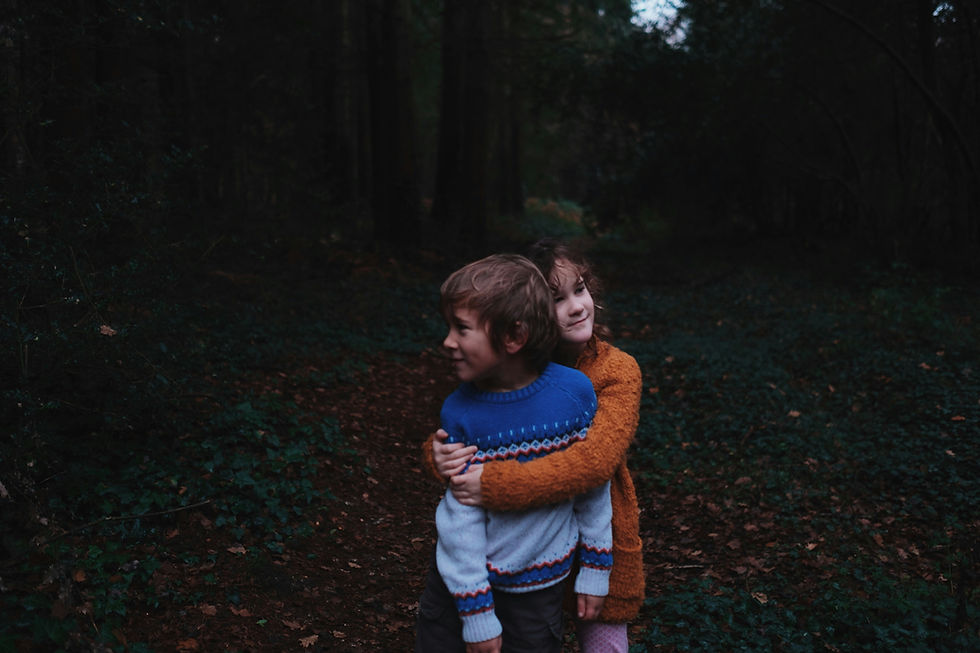
I was once a counsellor in a small private school with very kind and loving teachers. Each class had only ten children who all received high quality tuition and caring attention. All the children came from privileged backgrounds, wanting for nothing as far as we could tell, so there was an assumption amongst the staff that this was why they all behaved like (in the frank words of one or two teachers) grumpy, spoilt brats. I figured there was more to it, so I decided to observe all the classes and the children in the playground for a few weeks, also to ascertain what we, the adults in the school, could do better to address the behaviour of the children. The insight I got was not one I had predicted; While the children were on the receiving end of loving care, they were not being taught nor expected to be loving and caring themselves.
A year and a selection of initiatives later, you wouldn’t have recognised the children (happier and with healthier attitudes) – or the teachers, whose previous over-care was now balanced and integrated care.
Love cannot be taken for granted. It needs to be nurtured. It needs to be felt. Sometimes it needs to be taught. Personally, I don’t think we always give love enough credit. We think of it as a soft, soppy or sentimental state, when in actual fact it is a powerful practical tool that can make us function at our human best. Indeed, it is one of the things that make us human
I wonder whether we are neglecting love in many of its forms – as all the tech and AI and social media reduces our real, in-the-flesh human connection (with its sometimes messiness), it simultaneously reduces our opportunities to learn how to care and collaborate, how to love (with the mess) and be loving. I wonder…….
I also wonder whether we are consequently neglecting the ‘tool’ of love, the power it has to help our brains and bodies function at their best…….?
Love increases endorphins – (you may know this 😊), and other feel-good hormones. But that’s not all love does for us. Love also increases nitric oxide, (no, not laughing gas –that’s nitrous oxide – confusing I know!) Nitric oxide reduces blood pressure, improves blood circulation, and decreases clotting as it relaxes your arteries. In the brain, love activates areas associated with motivation, focused attention, making positive choices and taking care of yourself. Love can also deactivate pathways in the brain responsible for negative emotions such as fear and social judgment – which may explain why we say that romantic love is blind, (something I am all too familiar with looking back at my own enthusiastic blindness as I plunged wholeheartedly into one futile, inappropriate liaison after another. But that’s another story……….)
There are many types of love - seven according to the ancient Greeks, but they all release chemicals and activate specific parts of the brain that propel us to connect, to care, and to take caring action. Of the different types of love studied over the centuries, the love of humanity, selfless love or what the Greeks call Agape, is often referred to as the highest form of love. It is the antidote to terror and facilitates clear and values-based thinking. Feeling such love gives us more clarity of mind and forward-thinking insights than any of the fear-based rhetoric we are also currently exposed to. Love in its highest form is not a touchy-feely approach, it actually makes us smarter. This is a biological fact*.
When I was seventeen, I read ‘The Art of Loving’ by psychologist Erich Fromm, inspiring a lifelong fascination with the subject in its many forms. In time and in my studies, I learned that we are innately programmed to love, whether psychologically, physiologically, neurologically, or otherwise by some means we have yet to fully understand. Fromm famously claimed that love is not something that just happens to us, it is a decision we make.
Occasionally this can be straightforward, for example to feel love and compassion for victims of horrific acts of war and violence is a no-brainer and for most people comes quite naturally. But how, you may ask, can we ‘make the decision’ to activate feelings of love and compassion when we are feeling insecure, when it feels so much more natural to slip into anxiety and even anger? How can we decide to feel love when we are constantly reminded of reasons to feel worried and anxious?
Well, we can. The question is only how.
I admit, it takes effort. However, a conscious intention to refrain from what feels like the ‘natural’ path, -which is to keep doing what we’ve always done-, and instead shift our focus to an emotional state of love can be hard, but is often made more doable if we begin by getting to a ‘neutral’ state (just momentarily focus on the sky or the clouds for example), then shift to appreciation (you know there’s sun behind those clouds…….), then allow yourself to feel love for whatever you do truly love….. not sentimentally, not with expectations, just feeling the feeling, in your body.
When you are in that state of centred love, without any conditions, your heart sends messages to the brain (literally, biologically) that allow the two – heart and brain – to become synchronised. This enables the entire body, including the brain, to function at its most efficient. As a result, you are much more likely to respond with creative solutions to problems, to manage stress better, and to act according to your highest potential.
In other words, we will all better handle (and even teach) the difficult children, the scary news, the uncertainty, even our own desire to stop doom-scrolling, in a calm, managed way that we feel good about afterwards!
So here's to choosing love as a tool for a time of uncertainty and chaos.
*For more information about the biology of love, and how we can help you discover and apply practical tools to take charge of your stress and emotions, and generate love, contact us here.


